Halobacterium sp. NRC-1:  The NEW Model Microbe
Halobacterium sp. NRC-1 is an extremophile—an organism that thrives in extreme conditions. These microbes have been extensively studied in the DasSarma Laboratory for nearly 20 years and have been found to be an ideal microbe for teaching. Take a look at our Halobacteria kits and see for yourself how effective they could be in helping you teach microbiology.


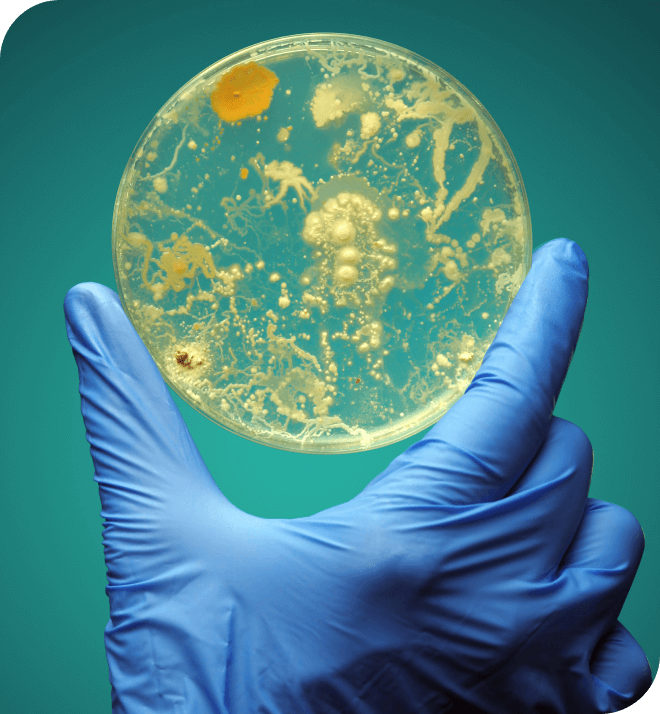
Pink and red colonies of Halobacterium sp. NRC-1 on agar salt plates.


Halobacterial "blooms" in the salt field of a lake.
Image provided by Cheetham Salt Ltd. of Australia.


View testimonials from students and teachers who have worked with Halobacterium


Halobacteria kits

  • Antibiotics in Action
    Introduce your students to antibiotics and a technique that tests microbes for antibiotic resistance. Students create a lawn of Halobacterium sp. NRC-1 and determine which antibiotics the microbe is susceptible to by looking for a lack of microbial growth around antibiotic-impregnated disks.
  • Basic Microbiology Skills Part 1
    Teach your students how to grow microbes on an agar plate using the safe, visually stimulating microbe, Halobacterium sp. NRC-1. Students learn the sterile and plate-streaking techniques used in biotechnology and the food and medical industries.
  • Basic Microbiology Skills Part 2
    This kit is a great way to introduce your students to this novel model microbe. Halobacterium is an earthly model of organisms that could be found on Mars.
  • Extremely Easy DNA Extraction Kit
    This kit helps students visualize DNA and its properties and meets the National Science Content Standards in Life Science. Using kit materials, students extract and spool out DNA from living microbes using techniques similar to those in top research laboratories.
  • Introduction to Life in an Extreme Environment
    This inquiry-based introduction to the colorful life of the Archaea helps students learn about microbes and their natural habitat—in this case, the extremely salty areas of the world, such as the Great Salt Lake and Dead Sea. It can also be used to illustrate how organisms adapt to a changing environment. Students culture the extreme halophile (salt-loving) microbe, Halobacterium sp. NRC-1, from a safe grain of salt.
  • Halobacterium sp. NRC-1 Media
  • Halobacterium sp. NRC-1 Cultures

Related links

Contact the developers of our Halobacterium products
Please give us feedback on our Halobacterium products. How effective were these products in your classroom?

Testimonials
"The Halobacterium kit from Carolina was packaged and organized to facilitate minimum teacher preparation time and the lesson plans and materials were easily adaptable for my special education introductory biology class. The kit provided my students with a safe and effective introduction to the concepts and skills of microbiology, as well as serving as an incentive for designing their own inquiry investigations about extremophiles. I was very pleased with the product!"

—Janet, teacher

"I really liked working with the Halobacterium this year. I was much more willing to have inexperienced students work with it than other bacteria that grow in more common conditions. The students were amazed that spreading such a small amount of culture substance on their petri dishes allowed them to grow so many colonies.

"Not only was it a good introduction to microbial culture techniques, but it also was a good way to highlight an organism from Archaea. Students are much less familiar with these types of organisms, and this lab gave them something to visualize. It also allowed an opportunity for us to discuss adaptations. I posed the question about the adaptive value of living in a salty environment, as well as the value of the pink or red pigment. In this fashion, I was able to make connections between our unit on microbes and the previous units on classification and evolution."

—Wendy, teacher